SolarFlame String Lights for Heavy Duty Pergola Use
 Jordan HaleStaff Writer
September 11, 2026. This assessment explores the integration of high-tensile lighting solutions into permanent backyard structures. It is written for homeowners seeking a professional-grade illumination system that requires no electrical hardwiring.
I remember the first time I stood under the cedar beams of my pergola at dusk, holding a tangled mess of standard garden wire that felt entirely too fragile for the task. A pergola isn’t just a garden feature; it is an architectural skeleton that demands a certain weight and resilience from whatever you drape across it. The wind tunnels that form between these structures can easily snap thin-gauge wiring, and the constant exposure to overhead sun degrades cheap plastics within a single season. According to the International Dark-Sky Association, the move toward shielded, efficient outdoor lighting is essential for reducing light pollution while maintaining safety, a principle that aligns with choosing high-quality solar components over disposable alternatives. When you are dealing with a structure that sits ten feet in the air, you don't want to be climbing a ladder every month to replace a burnt-out bulb or a frayed cord. The struggle is finding a balance between the delicate aesthetic of weatherproof solar fairy lights outdoor and the ruggedness required for a permanent installation. Most residential options feel like toys when held against a 4x4 post, lacking the thickness to survive a thunderstorm or the battery capacity to stay lit past 9:00 PM. It turns out that the tension required to pull a string light taut across a twenty-foot span is significant, often exceeding the breaking point of standard consumer-grade PVC jackets.
Photo by Gorma Kuma on Pexels
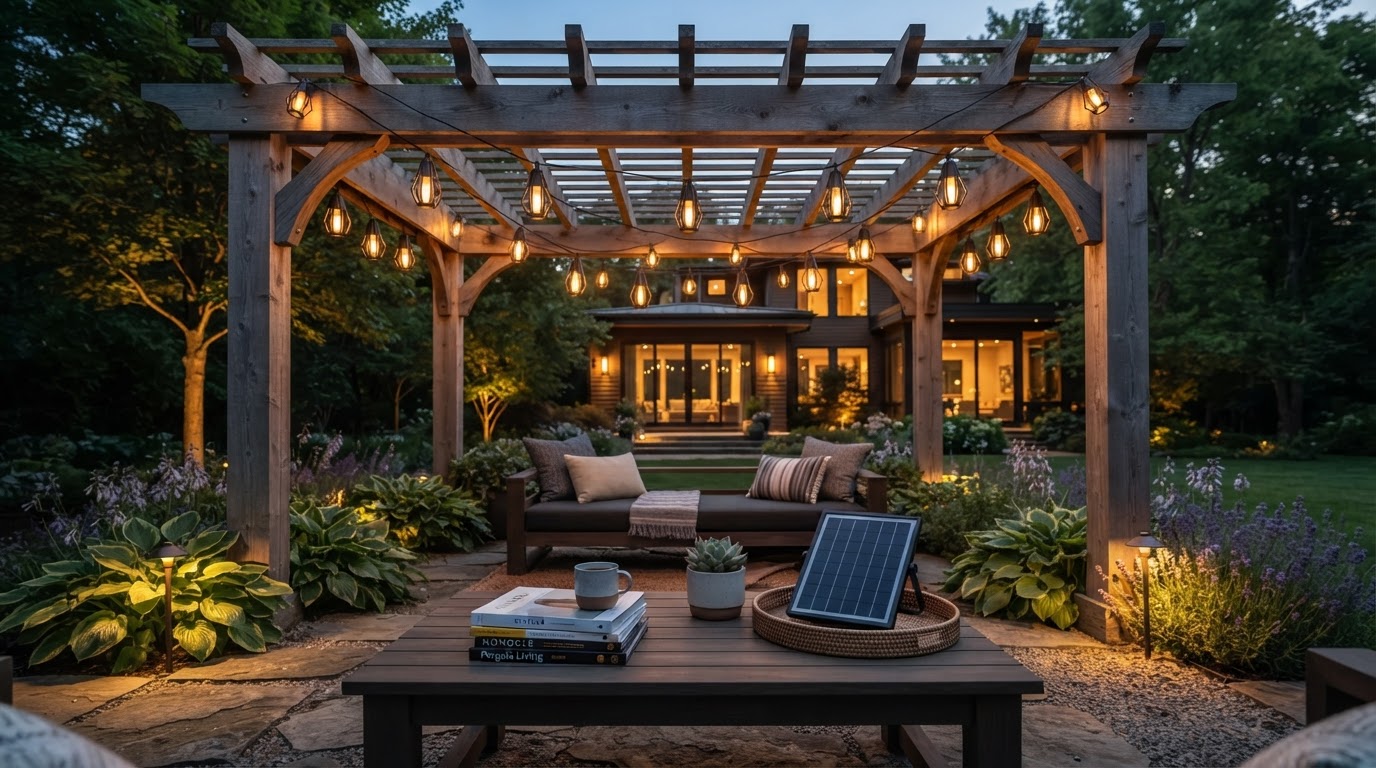
The first thing I noticed was the physical heft of the SolarFlame String Lights. Unlike the flimsy wires I had used previously, these felt like industrial equipment—thick, rubberized, and built to withstand the friction of being wrapped around rough-hewn timber. This specific build quality is what separates them from standard solar outdoor string lights. Because pergolas are inherently exposed, the solar panel itself needs to be more than an afterthought; it needs a mounting system that can tilt to catch the low winter sun while remaining anchored during high winds. The SolarFlame system utilizes high-efficiency monocrystalline cells that manage to pull a charge even on those hazy, overcast afternoons where my old lights would have stayed dark. I keep coming back to the way the flickering flame effect interacts with the wood grain of the pergola. It doesn’t just provide light; it adds a rhythmic, textured glow that mimics the warmth of a real fire without the hazard of open flames near dry wood. For those who need even higher specifications for large-scale properties, these units bridge the gap toward commercial grade solar string lights by offering shatterproof bulbs that won't rain glass down on a patio table if a gust of wind knocks the string against a beam. Somewhere around week two of the autumn rains, I realized I hadn't thought about the lights once—they simply worked, turning on at the exact moment the shadows deepened under the rafters, mirroring the reliability of our waterproof garden flame lights positioned along the perimeter path.
Selecting a system for a permanent structure requires a different mental framework than choosing temporary party decor. You have to account for the "sag factor"—the natural dip in a wire over time—and the environmental stress of the mounting points. When I was setting up my own space, I realized that the attachment hardware is just as important as the lights themselves. You want a system where the solar panel can be positioned up to fifteen feet away from the first bulb, allowing the pergola to remain in the shade while the charger sits in the sun. This flexibility is a core component of the SolarFlame String Lights design philosophy. Before you start your installation, consider this framework:
- Verify the total linear footage including the vertical drops down the posts to ensure the lead cable reaches the solar panel.
- Check the IP rating of the connectors; for pergola use, look for IP65 or higher to handle direct rain and snow accumulation.
- Assess the mounting surface—use stainless steel eye hooks or heavy-duty cable ties that won't degrade under UV exposure.
- Evaluate the battery capacity in milliampere-hours (mAh) to ensure the lights can sustain the flame effect for at least 6-8 hours after sunset.
- Test the light temperature; a warm 2200K-2700K range is ideal for creating a cozy atmosphere against wood structures.
Shop SolarFlame String Lights here