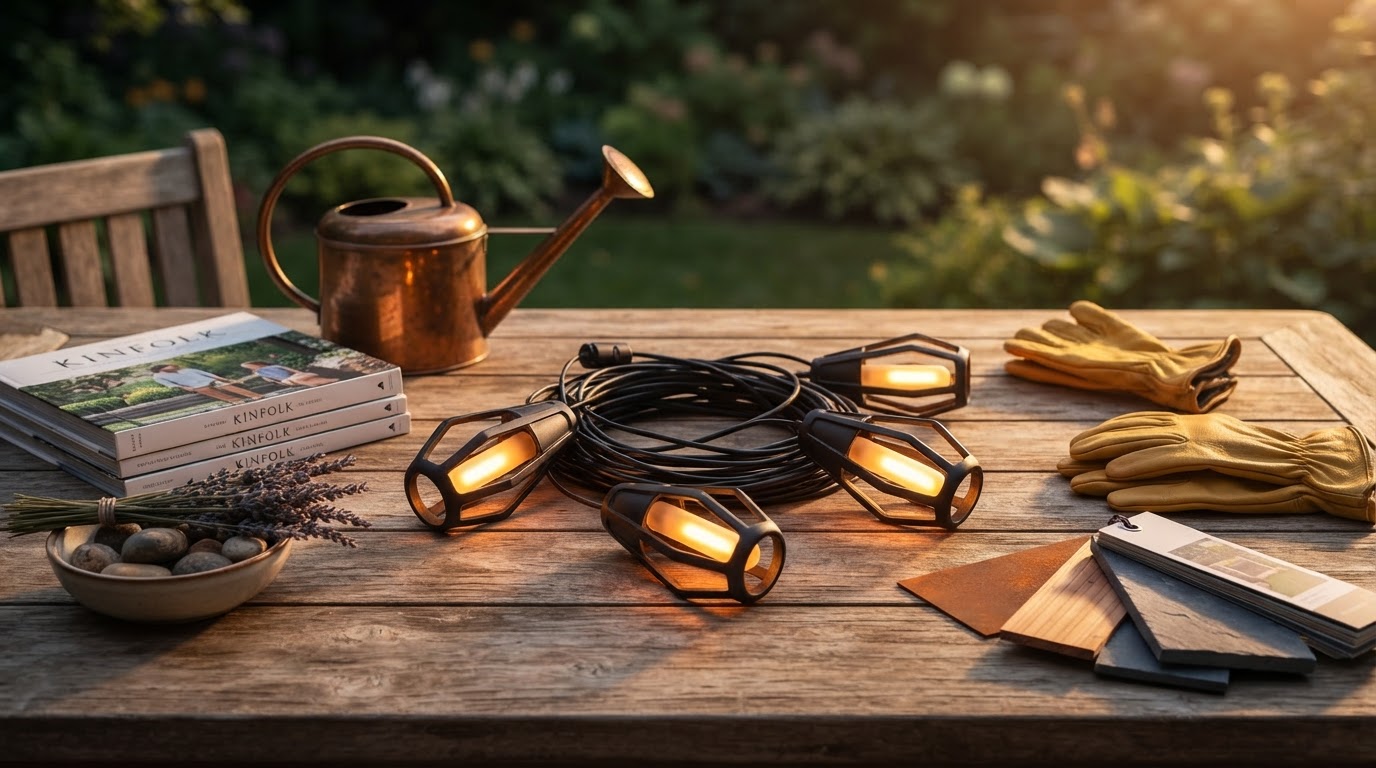
SolarFlame String Lights for Modern Landscape Design
 Maya ChenContributing Editor
August 15, 2026. This analysis evaluates the technical performance and aesthetic integration of SolarFlame String Lights within residential landscape architecture. It is written for property owners and designers seeking reliable alternatives to high-maintenance gas-fed torches.
The Limitations of Traditional Outdoor Lighting
The conventional wisdom says that to achieve a realistic firelight ambiance, one must invest in hard-wired gas lines or high-voltage electrical systems. This perspective ignores the significant labor costs and permanent site disruption required for such installations. According to Outdoor Solar Outlet, consumers seeking an immediate atmosphere often look toward 27-foot solar flickering LED bulb strands to bypass the logistical hurdles of traditional wiring. However, many entry-level options fail to address the specific lumen output required to simulate actual fire. The market is saturated with low-density 10-bulb strands that provide a disjointed visual experience rather than a continuous glow. Furthermore, the reliance on standard lithium-ion batteries without adequate waterproofing leads to high failure rates in humid climates. When homeowners search for decorative garden lanterns solar powered solutions, they are often met with products that prioritize decorative casing over the actual quality of the light source. The technical gap between a novelty flickering bulb and a true flame-effect LED is substantial, particularly when considering the 2000K color temperature necessary to mimic natural combustion without the blue-tinted artifacts common in cheap semiconductors.
SolarFlame String Lights Technical Integration
Photo by Artūras Kokorevas on Pexels
SolarFlame String Lights address these performance gaps by focusing on the specific physics of flickering flame solar lights. Unlike standard LED strands, these units utilize a patented diode arrangement to simulate the erratic movement of a flame. Here's the part nobody talks about: the efficacy of a solar light is entirely dependent on the surface area of the monocrystalline panel and the efficiency of the charge controller. SolarFlame systems utilize high-conversion panels that allow for extended runtimes even in partial shade, a necessity for gardens with mature canopies. For larger installations, property owners often compare these to the 50.7ft strands cited by VXB, which offer extensive coverage for patios and decks with warm LED bulbs. The SolarFlame architecture ensures that each bulb maintains a consistent flicker rate, preventing the 'strobe' effect seen in lower-quality electronics. When integrated with waterproof outdoor solar lanterns, these string lights create a layered lighting scheme that moves beyond simple illumination into the realm of architectural enhancement. The integration of 2000K LEDs ensures that the light remains in the warm spectrum, avoiding the clinical feel of high-Kelvin outdoor lights. This specific color temperature is critical for maintaining circadian rhythms and reducing light pollution in residential neighborhoods.
Decision Framework for Solar Illumination
Selecting a lighting system requires moving past aesthetic preferences to evaluate hardware durability and light quality. Run the math: a 21-foot strand like those documented by Tractor Supply featuring 10 patented LED flame-effect bulbs provides a specific density of approximately one bulb every two feet. This density dictates the visual 'weight' of the installation. If the goal is to replace hanging solar torches with flickering flame effects, the mounting height and bulb spacing must be calculated to ensure overlapping light pools. I'll change my mind when a non-solar alternative can match the zero-operating-cost profile while maintaining the same IP65 weather resistance ratings. Before finalizing a purchase, evaluate these technical criteria:
- Verify the Kelvin rating is 2000K or lower to ensure a true fire-like glow.
- Confirm the total strand length matches the perimeter requirements without excessive tension on the wire.
- Assess the solar panel mounting hardware for compatibility with existing fence posts or rooflines.
- Ensure the battery capacity supports at least 8 hours of illumination after a standard charge cycle.
- Check for IP65 or higher waterproofing to withstand seasonal precipitation.
- Match the flicker frequency with existing flickering flame solar lights to maintain visual consistency across the property.
Shop SolarFlame String Lights here
Sources
- 27Ft Solar Flickering LED Bulbs - Solar Panel Powered Hanging String Lights
- Solar Powered Flickering Flame String Lights - Warm Glow ✅
- Foxflame Solar Flame String Lights, 1 pk.