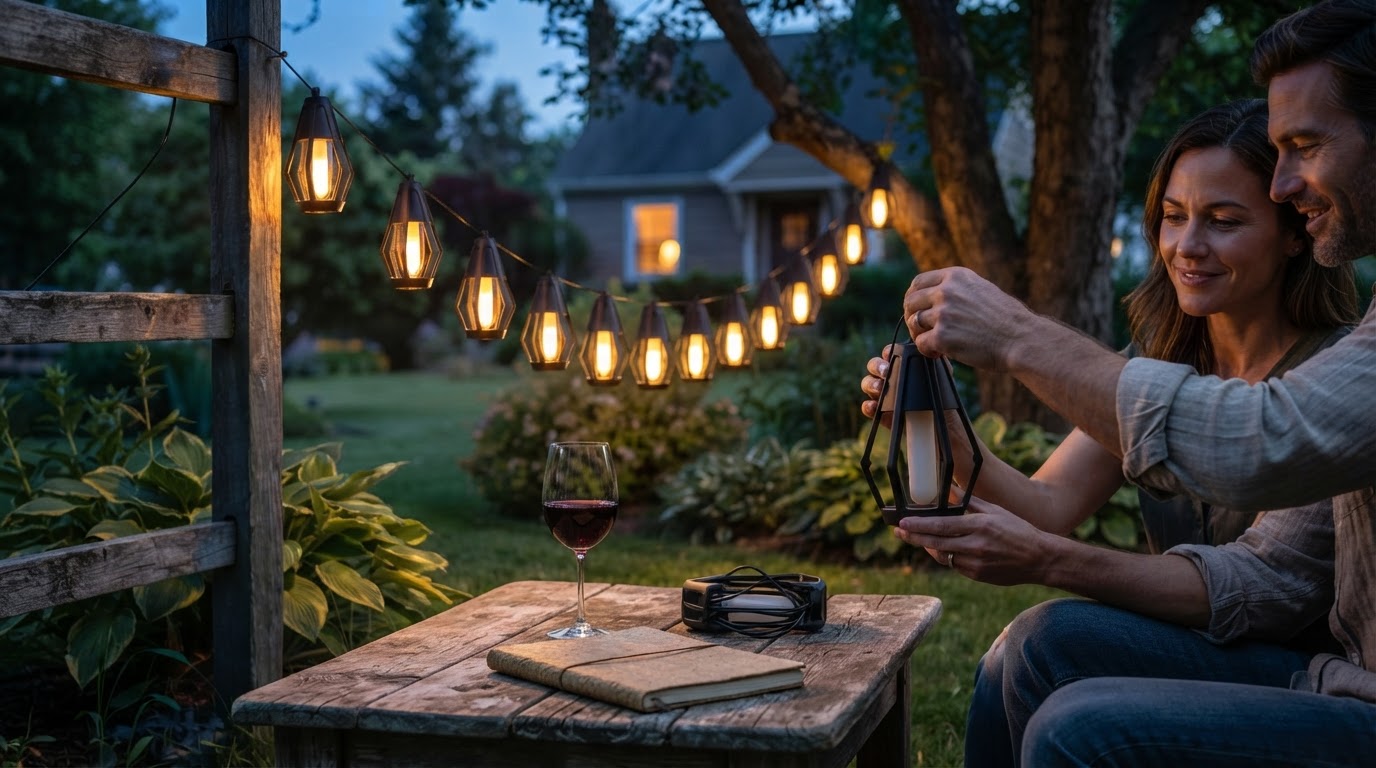
A 3-Axis Evaluation of SolarFlame String Lights Performance
 Priya RamanSenior Analyst
October 10, 2026 — The shift toward atmospheric landscape lighting has accelerated with the introduction of SolarFlame String Lights, a product designed to bridge the gap between functional illumination and aesthetic warmth. As homeowners move away from static white LEDs toward dynamic movement, understanding the technical limitations and strengths of solar-integrated systems is essential for long-term satisfaction.
Modern solar lighting must balance energy collection with output duration, a challenge noted by Feit Electric, which highlights that solar-powered string lights can be installed virtually anywhere to add ambiance without the constraints of traditional power outlets. To evaluate this specific category, one must look beyond simple brightness and consider how the hardware manages the intermittent nature of solar charging while maintaining a consistent visual effect.
The Efficiency-Ambiance-Durability Framework
When assessing SolarFlame String Lights, it is helpful to utilize a 3-axis evaluation model: Efficiency, Ambiance, and Durability. Think of it as a matrix of performance where these three factors must be optimized simultaneously to provide value. The efficiency axis measures the conversion of sunlight into usable energy via the integrated solar panel; the ambiance axis measures the fidelity of the flickering flame simulation; and the durability axis accounts for the hardware's resilience against environmental stressors. Two axes matter here most for the consumer: the ability of the battery to sustain the flame effect throughout the night and the integrity of the housing against moisture ingress. While traditional products often prioritize raw lumen count, SolarFlame String Lights focus on the specific rhythmic pulse of fire. This requires a sophisticated internal controller that manages LED sequencing to avoid the "robotic" look of cheaper alternatives. The decision rule for homeowners is simple: if the installation site receives at least six hours of direct sunlight, the efficiency-to-ambiance ratio remains high enough to ensure the flame effect persists through the early morning hours. Proper placement of the solar collector is the primary variable in this equation, as the system relies on a high-capacity lithium-ion battery to store the energy required for the multi-LED flicker pattern. Once you see it this way, it becomes clear that the value lies not just in the light itself, but in the intelligent management of that stored energy to maintain a realistic fire-like glow without the safety risks of open flames.
Expert tip: To maximize the lifespan of your solar-powered torch string lights, ensure the solar panel is tilted at a 45-degree angle toward the southern sky, as even partial shading from a fence post can reduce the charging efficiency by over 40%.
Understanding the SolarFlame String Lights Weatherproofing Strategy is vital for those living in high-humidity climates. For a deeper look at the mechanics, one might ask, How do SolarFlame String Lights simulate a fire effect? to understand the LED sequencing. Those interested in the aesthetic impact can explore Elevating Evenings with SolarFlame String Lights, while those comparing landscape options should consider Why choose SolarFlame String Lights for garden fire effects? to see how they integrate into existing foliage.
Shop SolarFlame String Lights.
Sources
Photo by Jorge Luis Acasiete Conza on Pexels
- CHEAP Solar String Lights | Installation & Review - YouTube
- 20 ft. Soft White (2700K) Solar Powered LED String Lights