SolarFlame String Lights vs Standard Solar Torch Sets
 Priya RamanSenior Analyst
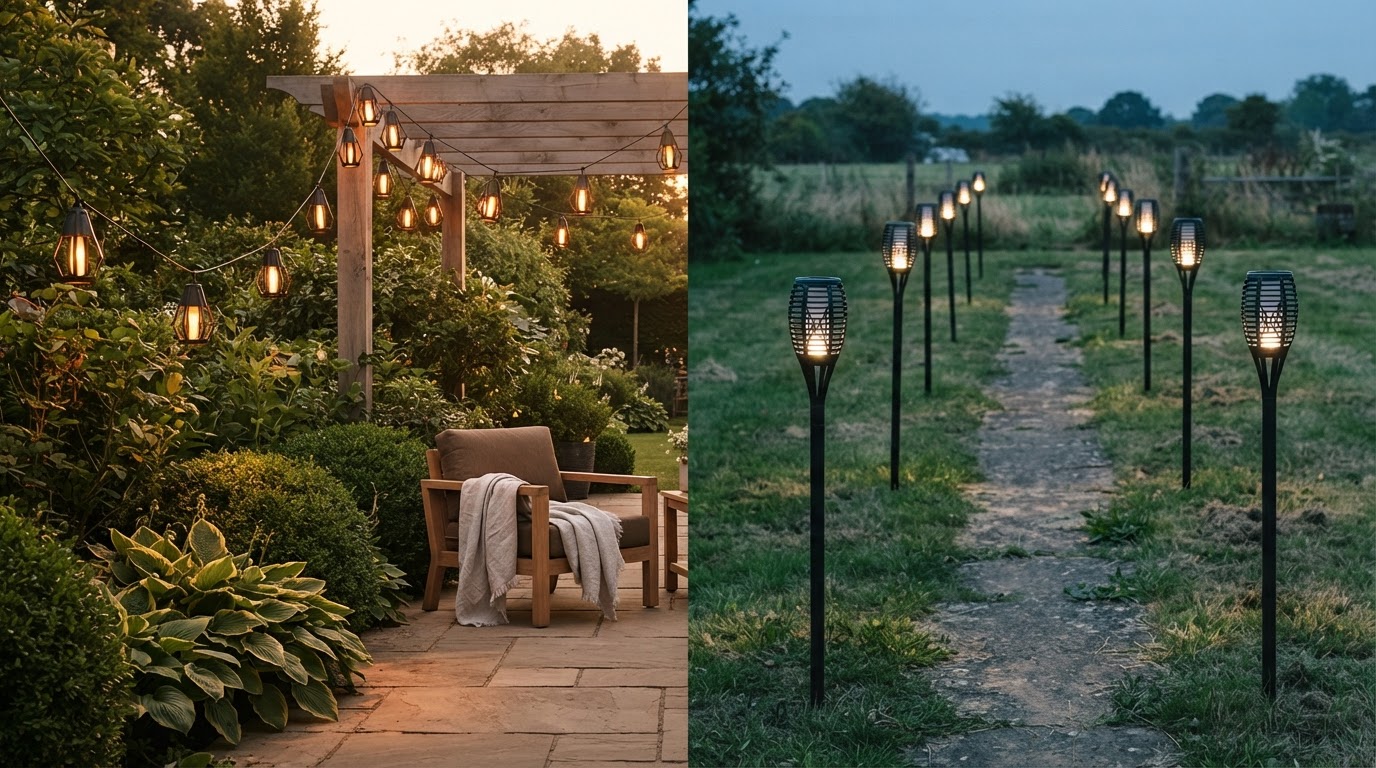
September 20, 2026 — The shift toward integrated landscape aesthetics has positioned SolarFlame String Lights as a sophisticated alternative to traditional ground-staked solar torches. As homeowners seek to move beyond the "runway" look of path lights, these string-based systems allow for vertical fire-effect integration that was previously impossible with standard hardware.
The transition to solar-powered flickering effects represents a significant jump in outdoor utility, as Feit Electric notes that solar-powered string lights install anywhere, adding ambiance without needing a traditional outlet. This flexibility is the cornerstone of modern exterior design, moving the flame effect from the dirt to the canopy. When evaluating these systems, think of it as a matrix of three critical dimensions: spatial distribution, installation permanence, and visual synchronization.
The Three-Axis Deployment Model
Two axes matter here: the elevation of the light source and the density of the flame effect. Standard solar torches are vertically constrained, typically sitting 12 to 24 inches above grade. SolarFlame String Lights break this axis by allowing the flame effect to be suspended from pergolas, trees, or structural eaves. This elevation change alters the light's impact; while a ground torch illuminates the grass, a string-based system creates a ceiling of fire that reflects off surfaces below. The decision rule is simple: if the goal is perimeter marking, ground torches suffice, but for immersive atmospheric lighting, the string format is necessary.
Unlike individual stakes that operate on isolated sensors, SolarFlame String Lights utilize a centralized high-efficiency solar panel. This ensures that every bulb in the sequence activates at the exact same light threshold, maintaining a uniform aesthetic across the entire installation. This synchronization is often a pain point for users of individual solar units, where varying battery health or minor shading can lead to a staggered, uncoordinated appearance. By consolidating the power source, the system maintains a consistent flicker rate and color temperature across all 10 to 20 feet of the run. This architectural approach allows for more complex layouts, such as those found in SolarFlame String Lights for Modern Tropical Patios, where the lighting must compete with dense foliage.
Expert tip: When installing the centralized solar panel, ensure it is placed at the highest point of your structure rather than at eye level to maximize the charging window and avoid shadows from the very foliage you are trying to illuminate.
Understanding [how SolarFlame String Lights simulate a fire effect](/blog/solarflame-string-lights-fire-effect-simulation) is key to placing them effectively, as the LED sequencing requires specific viewing distances to appear most realistic. For those considering a more traditional look, determining if SolarFlame String Lights can replace Edison flame bulbs depends on whether you prioritize the vintage glass shape or the dynamic movement of the flame. For more complex vertical setups, the [hanging solar flame lanterns string](/blog/hanging-solar-flame-lanterns-string-setup) guide provides a 5-step framework for secure installation in high-wind areas.
Shop SolarFlame String Lights.
Sources
Photo by JUNLIN ZOU on Pexels
- CHEAP Solar String Lights | Installation & Review - YouTube
- 20 ft. Soft White (2700K) Solar Powered LED String Lights